




No Shadow, No Life
No Shadow, No Life
A Winter’s Tale from Abiko
- A Winter’s Tale from Abiko
- Deep Dive: No Shadow, No Life — To Weave the Shadow into the Light
- SF & Fantasy Themes: The Magic of Naming
- Everyday Wisdom: No Shadow, No Life and Mindfulness
- A Perspective from the Curator’s Desk
- Latest Trends: The Enduring Legacy of Earthsea
- Summary: No Shadow, No Life and Your True Name
- Today’s Latin Wisdom
Greetings, dear wanderers of the inner landscape. The air in Abiko has turned quite crisp lately, the kind of biting chill that sends me scurrying back to my teapot. It reminds me of the frost-nipped mornings in the Cotswolds, where the mist clings to the ancient stone walls like a silent memory. As the seasons shift, I find myself drawn instinctively to stories of transformation—those rare, luminous tales that act as a mirror to our own evolving souls.
Today, I wish to walk with you through the archipelago of Earthsea. Ursula K. Le Guin’s A Wizard of Earthsea is far more than a “children’s book”; it is an intricate map for anyone who has ever felt pursued by their own shadows. Through the journey of a young mage named Ged, Le Guin whispers a profound truth: we are defined not by our power, but by our courage to face the darkness within.
Deep Dive: No Shadow, No Life — To Weave the Shadow into the Light
Accepting one’s shadow is not a defeat, but the essential act of becoming a whole human being.
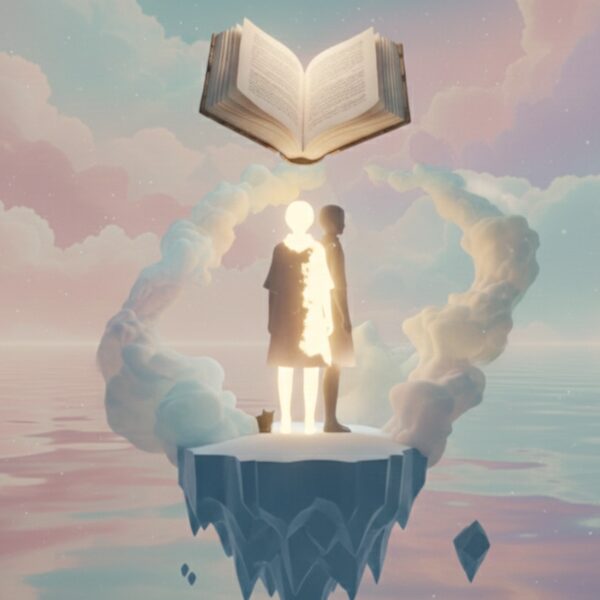
At the heart of Ged’s journey is a moment of profound, youthful arrogance: the summoning of a spirit from the dead, an act that results in the release of a nameless, terrifying shadow. Ged spends the vast majority of the book fleeing across the seas, terrified of the very thing he brought into being. It is only after a wearying pursuit that he comes to a startling, life-altering realisation: the shadow is not an external enemy to be slain, but a part of himself.
This narrative beautifully mirrors the Jungian shadow. Carl Jung described the “shadow” as the unconscious aspect of the personality that the conscious ego does not identify with. Le Guin’s profound insight is that we cannot defeat our darkness by running from it or pretending it does not exist. We can only conquer the shadow by naming it—by accepting it as our own. Without this integration, there is No Shadow, No Life; for to deny the shadow is to deny the self.

SF & Fantasy Themes: The Magic of Naming
To name a thing is to understand its essence, bridging the gap between appearance and reality.
While Earthsea is high fantasy, it shares a profound connection with the speculative themes in Le Guin’s science fiction. In a previous essay, I explored Le Guin’s vision of balance in The Left Hand of Darkness, where she similarly dismantles our rigid, often binary perceptions of identity. In both worlds, she suggests that truth is found not in the extremes, but in the delicate equilibrium between them.
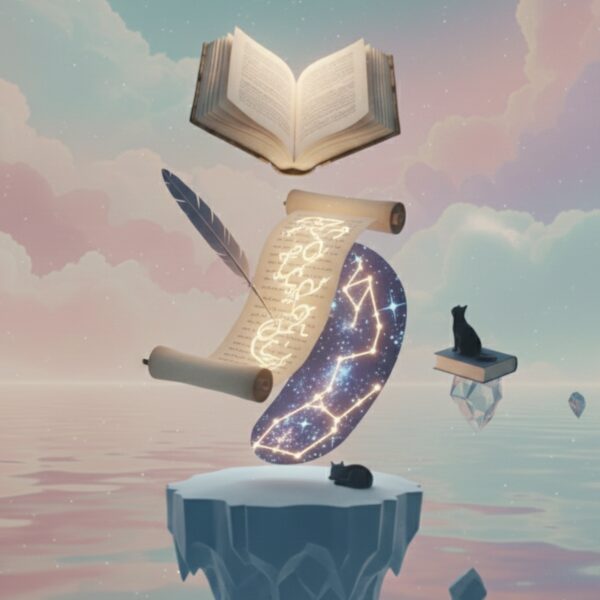
The power of “True Names” in Earthsea is a magnificent metaphor for the pursuit of essence over appearance. In the archipelago, to know the true name of a thing is to hold power over it, because a name represents its fundamental reality. Whether exploring alien cultures or magical isles, Le Guin challenges us to look past the superficial and find the fundamental pulse that connects all life. She reminds us that language is a sacred medium for understanding the true nature of existence.
Everyday Wisdom: No Shadow, No Life and Mindfulness
Mindfulness is the quiet courage to observe our imperfections without judgement, transforming them into wisdom.
How do we apply the arcane lessons of a young mage to our daily lives? In our modern, relentlessly busy world, we often try to “edit” our personalities for public consumption, hiding the parts we find imperfect. However, mindfulness teaches us a different way: to observe these ‘shadows’ without judgement or the need to immediately fix them.
Just as Ged must stop his frantic running and turn his boat around to face his shadow, we find lasting peace when we acknowledge our flaws with a gentle heart. True mindfulness is the realisation that we are a complete spectrum of light and dark. By making friends with our shadow, we stop wasting energy on concealment and start living with a renewed sense of wholeness.
A Perspective from the Curator’s Desk
Just as an artefact’s value lies in its history, our true self is found in the layers of our lived experience.
Working in a museum, I am surrounded by objects that have lost their original names and contexts. Yet, when we look closely, we can still feel the vibrant intent of the creator reaching out to us across time. Le Guin’s writing is much like a well-preserved artefact; it holds a timeless truth about the human condition that remains vibrant despite the passing years. As a curator, I see my role as helping people reconnect with these lost “names,” just as Le Guin allows us to reconnect with our own forgotten histories.
Latest Trends: The Enduring Legacy of Earthsea
In an age of synthetic creation, the authentic human struggle remains our most vital lighthouse.
Even in this age of rapid AI development, the “Earthsea Cycle” continues to inspire. While an AI can generate endless streams of grammatically correct text, it cannot replicate the lived experience of suffering and self-overcoming that Le Guin weaves into every sentence. True creation requires a soul that has faced its own shadow. As we move further into a world of synthetic content, the authentic voice of someone who has wrestled with the darkness becomes our most valuable compass.
Summary: No Shadow, No Life and Your True Name
To live without self-awareness is to be a ghost in one’s own life. Ged’s story is a powerful reminder that our “Personal Legend” is not just about mastery over external forces; it is about the quiet, internal courage to be whole.
Embrace your shadow, for it is only by doing so that you can truly and safely step into the light. When you finally call your shadow by its true name, you find that the darkness was never an enemy, but a companion waiting to be integrated. Go forth and seek your own name; the journey itself is where your life begins.
Today’s Latin Wisdom
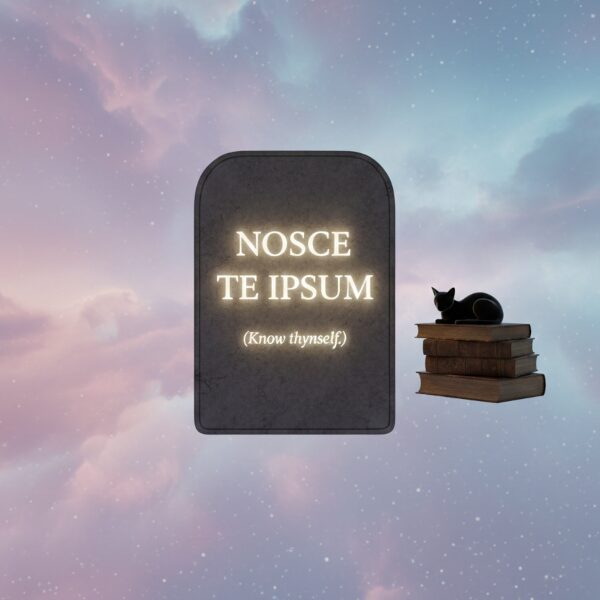
Nosce te ipsum
“Know thyself.”
(English Translation: Know thyself)
The Quest for the True Name in A Wizard of Earthsea
Related Articles
-
SF Novel Masterpiece Collection: Discovering the Shadows of Ill Met in Lankhmar by Fritz Leiber
Fritz Leiber Lankhmar is a masterpiece of fantasy. Explore the mysterious world of Lankhmar and the Hugo Award-winning novella by Fritz Leiber.

-
No LIFE, No CAT. mindfulness: Embracing the Wet Embrace. Learning “Imperfection” and Acceptance from the Sound of Rain
Discover how the gentle rhythms of rain can guide you towards mindfulness and inner calm. Learn to embrace life’s beautiful imperfections and find peace in nature’s quiet wisdom.
-
Masterpiece Collection: The Quest for Ultimate Harmony – Siddhartha by Hermann Hesse

No Journey, No Life: Sophia Aria analyses Hermann Hesse’s classic, Siddhartha, tracing the spiritual quest for ultimate self-discovery and Eastern wisdom. A profound look at the meaning of experience.
Leave a Reply Cancel reply